Introduction to the China and Japan Collection at the National
Botanical Garden of Iran
The garden design in the Far East (China and Japan) dates back thousands of years before Christ. Garden landscaping in China and Japan is recognized globally as one of the famous styles of garden design. Due to high population density and land scarcity this style has always been shaped around small spaces and miniature layouts, consistently, drawing inspiration from nature.
The development and completion of the China and Japan collection at the National Botanical Garden of Iran began in 1994 covering an area of 2.3 hectares. This collection was created by incorporating and utilizing. specific features of Chinese and Japanese garden styles Besides the planting and conservation of native Chinese and Japanese plant species, the design principles of these traditional gardens have also been meticulously applied
In designing these gardens, three main elements stone, water, and plants are extensively used.
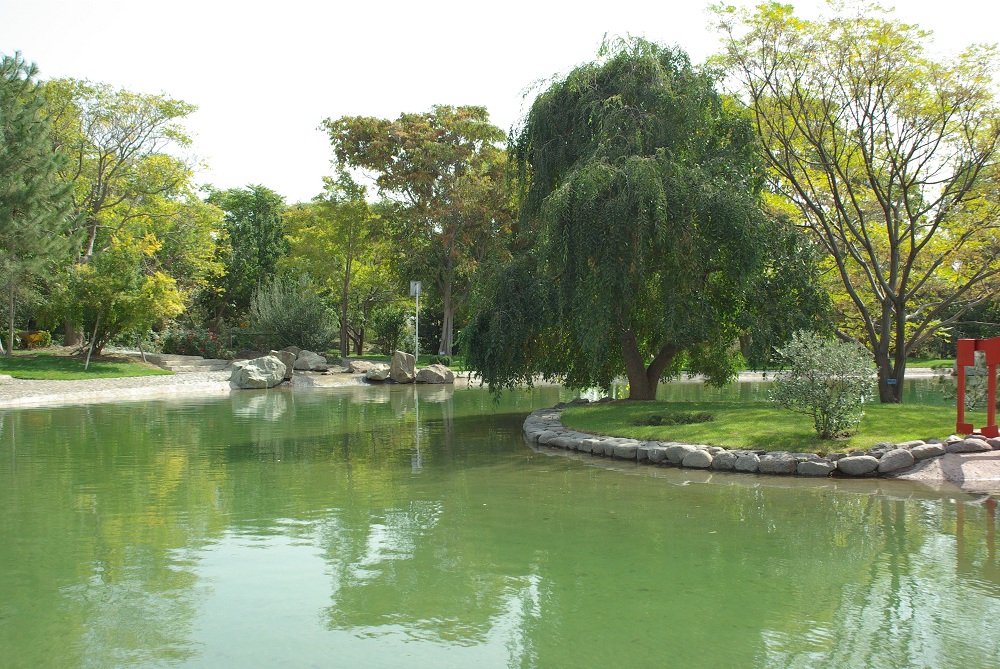
Stones and rocks symbolize real mountains and permanence in Chinese and Japanese garden styles. In this collection, stones are used not represent only in walkways and pathways but also in waterfall and river designs leading to the lake, with various tall and short upright stones placed throughout the collection.
The element of water is used both literally and symbolically in this space. A pump constantly circulates water from the lake to the top of the waterfall,creating the sound of flowing water as it cascades over rocks along its path. This movement adds life and beauty to the garden and generates waves in the lake unmistakably reflecting the essence of nature. The large lake not only provides a favorable environment for plant growth but also enhances the beauty of the area by mirroring trees, shrubs, clouds, and the sky throughout the different seasons.
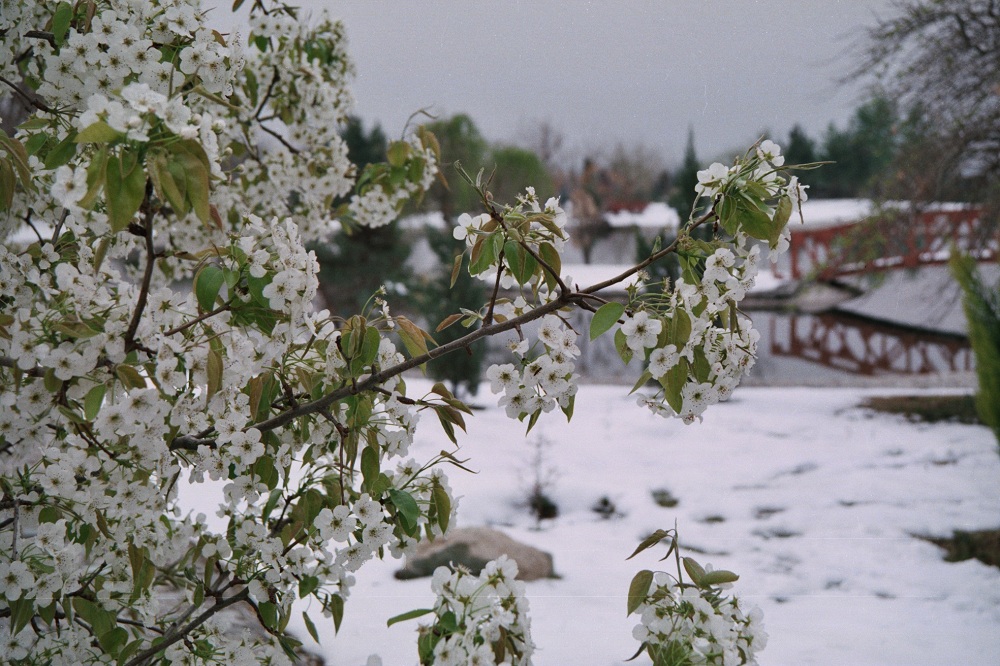
Plants are considered the primary element in these gardens. The beauty of tree foliage and the flowers of perennial shrubs are carefully highlighted to create scenic views. The design of the collection keeps the lake as the central focus, with the plant arrangement rising in height as it extends outward.The use of coniferous species, broad-leaved evergreens, deciduous trees with varied autumn colors, flowering trees and shrubs—ensuring that blooms are present in every season—and the individual placement of shorter trees and shrubs beside rocks add to the garden’s distinctive characteristics. Currently, the China and Japan collection at the National Botanical Garden of Iran features native species from China and Japan.
Notable 173 species in this collection include the Ginkgo biloba, Cudrania tricuspidata, Nandina domestica, Malus floribunda, Acuba japonica.
 باغ گیاه شناسی ملی ایران | موسسه تحقیقات جنگل ها و مراتع کشور