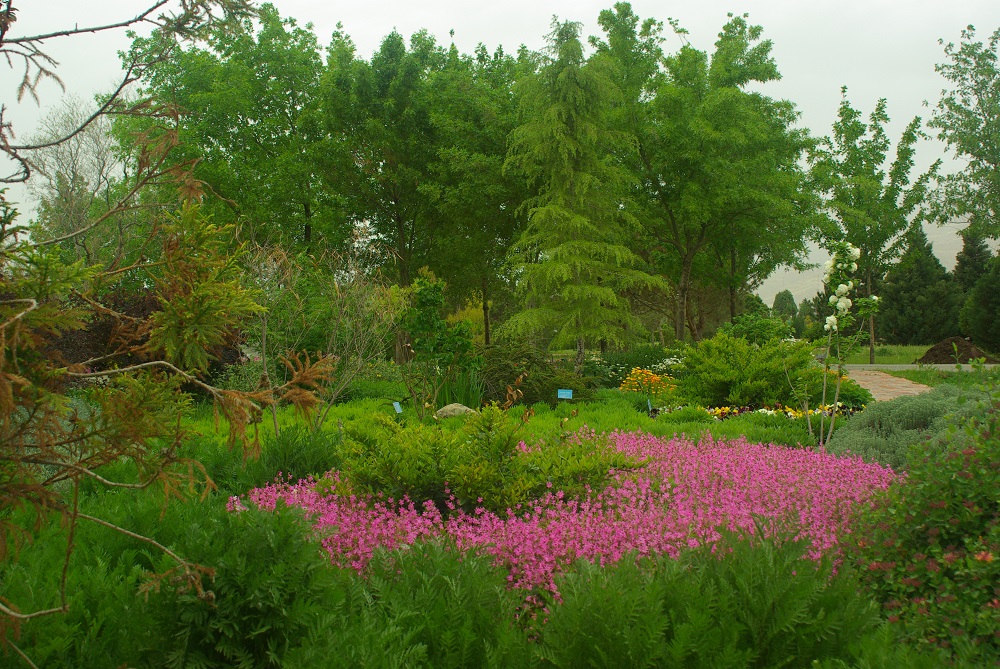
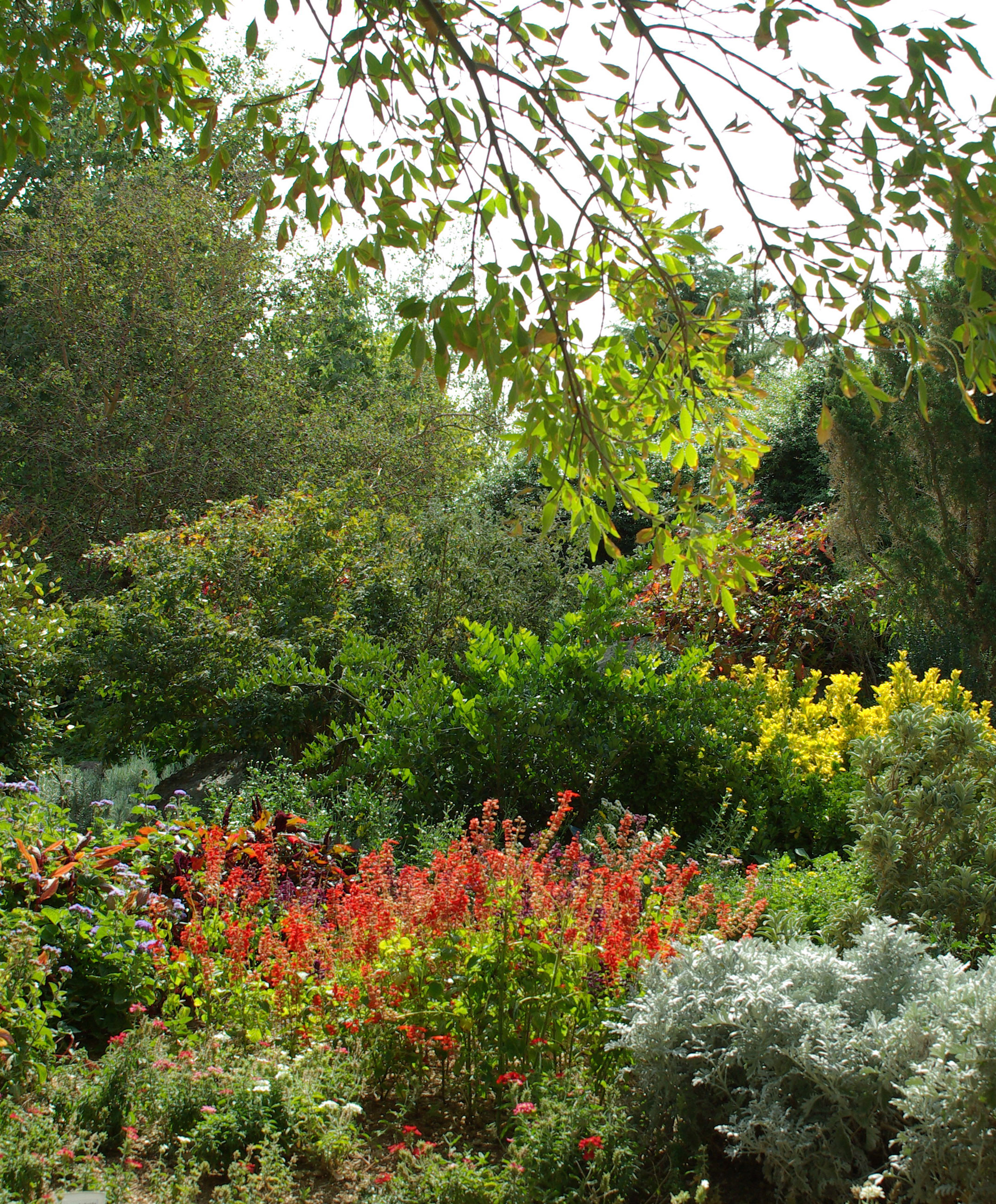
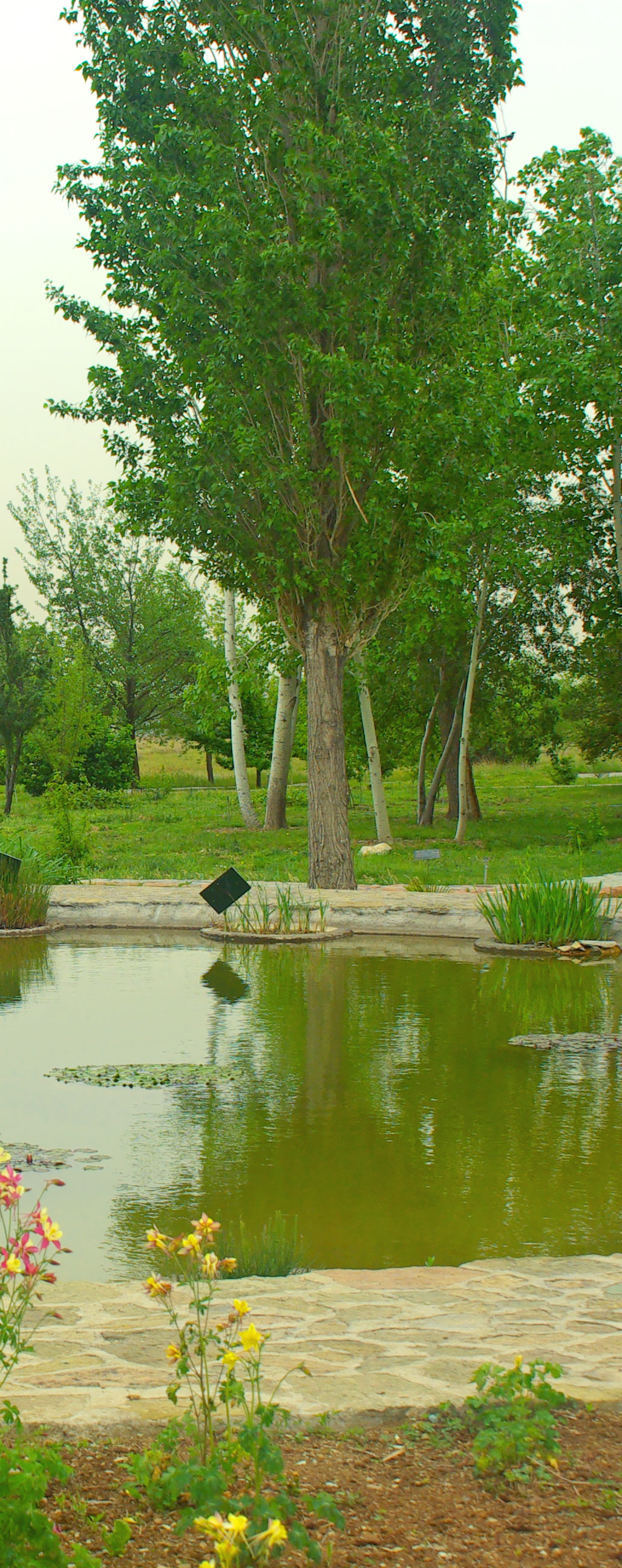
This garden was established in southern part of NBGI in 1992 and covers an area approximately 8.5 hectares. It serves as a training place suitable for training botanical concepts to students studying Plant Biology, Pharmacology, Agriculture and Natural Resources.
Unlike other gardens in NBGI, each plant family is cultivated separately in its own plot. The size of the plots is determined by the size of the respective plant families. The arrangement followed Arthur Cronquist (1919-1992)’ classification system, which is based on the gradual evolution and relationships among the families. Primitive families are located at the main entrance, while more and most advanced families in the middle and end of the garden.
The main entrance of the garden represents the Gymnosperms. The majority of the garden is occupied by Dicotyledons. Monocotyledons such as cereal family (Poaceae) are placed in northeast section. A small pond representing Nyphaea alba and aquatic plants symbolizes the relationships between Monocotyledons and Dicotyledons.
Gymnosperms placed in the main entrance of the garden. Ginkgo biloba, the primitive group, placed in the center of the Gymnosperms. Most part of the garden is occupied by Dicotyledonous, starting with the Ranales (a primitive group) in the northern section and ending to Asterales (an advanced group) in the southern section. This layout illustrate the gradual evolution and affinities among the plant families. Monocotyledons are situated in the northeast corner. A small pond representing Nymohaea alba and Alisma plantago-aquatica which highlight the affinity between the monocotyledons and dicotyledones.
 باغ گیاه شناسی ملی ایران | موسسه تحقیقات جنگل ها و مراتع کشور